

How Do You Boil A Frog?
Slowly is the answer.

Friedrich Goltz ran his first thermal experiments on frogs in 1869. His findings were contested almost immediately. Heinzmann repeated variations in 1872, but these results differed, leading to decades of argument among scientists about methodology and ethics.
What survived the argument was narrower than the popular story suggests and more precise.
A frog’s thermal detection system is rate dependent. Skin receptors measure the speed of temperature change, not the temperature itself. Research across multiple studies suggests that at heating rates above roughly 0.002 degrees Celsius per second, escape behaviour activates reliably. Below that threshold, the frog remains.
The frog in the slow heat is physically capable of escape throughout the process. Even though the instinct is present and the limbs are working, it stays in water with rising temperatures. What changes is the information reaching the detection system. At low heating rates, that information falls below what physiologists call the just noticeable difference. The system receives a signal too weak and too gradual to act on.
The nineteenth-century scientists who studied this were not wrong to find it interesting: a functioning escape system, presented with a real threat, producing no escape response.
That gap between recognition and response is what interests me.
The gradient determines whether the alarm fires. Keep the temperature rising slowly enough, and a healthy, capable animal sits in water that will kill it. This is not a flaw in the animal; it is a precise description of how sensory thresholds work.
Sound familiar? After all, this piece is written by humans for humans.
Let’s Talk About Ernst Heinrich Weber
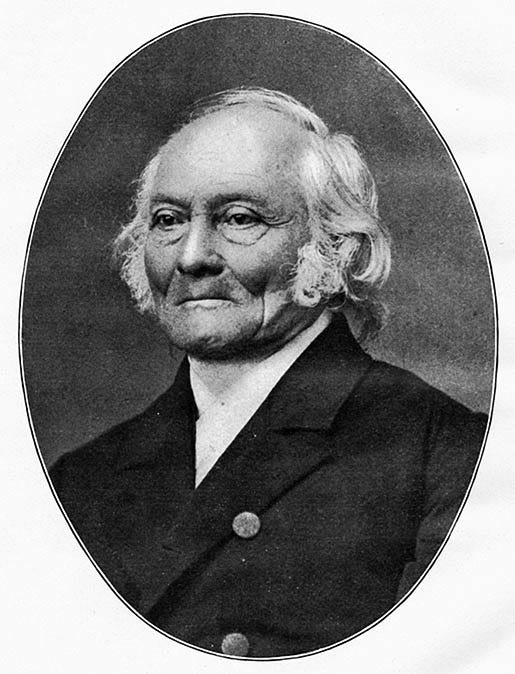
In 1834, a German physiologist named Ernst Heinrich Weber noticed something consistent across sensory experiments. The ability to detect a change depends on the size of that change relative to the starting conditions. A person holding a ten-kilogram weight feels almost nothing when one gram is added. However, the same person holding a feather feels that gram immediately.
Weber formalised this as a ratio. The change required to trigger a noticeable response is always proportional to the existing stimulus. Small starting conditions require small changes to trip the alarm; large starting conditions require proportionally larger ones.
His student Gustav Fechner extended the work over the following decades. By the late nineteenth century, what began as observations about weight and sound had become a foundational principle in sensory science. The threshold for noticing change was never fixed; it moved in direct proportion to what the organism had already adapted to.
This is the mechanism the frog demonstrated in Goltz’s laboratory.
This is worth reflecting on for a moment. The same sensory architecture that makes a species responsive and alive, the same system that detects danger and produces action, becomes unreliable precisely when change arrives below the threshold of noticeability. The more gradual the shift, the more completely the adaptation mechanisms absorb it before the alarm sounds.
Weber’s ratio does not concern itself with the type of organism it governs or the nature of the stimulus being applied, whether heat or information. The mathematics of the threshold operates in the same way.
The frog in Goltz’s pot exemplifies this principle.
So does anything else that processes its environment through a sensory system and uses past experiences to define what normal feels like.
This, it turns out, is quite a lengthy list.
The Six Degrees To Boil A Frog

In the case of any organism consuming repeated information from its environment, six systems govern whether the alarm fires.
They do not operate in sequence; rather, they operate simultaneously, with each one compounding the others.
The First Degree: Illusory Truth Effect.
Psychologists use the term predictive processing to describe how the brain handles incoming information. The model posits that the brain continuously generates expectations based on past experiences and then measures new input against those expectations.
What matches the expectation requires very little processing. What violates it demands attention.
A claim encountered once sits outside existing expectations and receives scrutiny. The same claim encountered ten times fits an established pattern. The brain processes it cheaply, quickly, and with less critical evaluation each time.
Hasher, Goldstein, and Toppino tested this directly in 1977. Participants rated the truth of statements across multiple sessions. Statements seen in earlier sessions received higher truth ratings in later ones, regardless of their accuracy. The effect held even when participants were informed that some statements were false. Forty-seven years of subsequent research has replicated and extended the finding across different populations, languages, and formats.
The first degree lowers the threshold for accepting a claim. Each repetition moves that threshold downward without the organism registering the change.
The Second Degree: Chronic Stress and Prefrontal Suppression.
The organism does not process information in a neutral state; rather, it processes information within a body that responds to what it perceives.
Research on acute stress and cognitive function shows a consistent pattern. Short-term stress hormones, including cortisol, sharpen certain types of attention and accelerate basic threat responses. Prolonged activation of the same hormonal systems produces different effects. A 2009 study by Liston, McEwen, and Casey using neuroimaging found that chronic stress was associated with reduced connectivity in prefrontal networks responsible for attention regulation and decision-making.
The prefrontal cortex is where careful evaluation occurs, where contradictions are caught, and where a slow accumulation of small distortions might otherwise be noticed.
The specific claim here is narrower than it might first appear. Chronic stress does not switch off critical thinking; rather, it reduces the resources available for it. The organism can still evaluate, but it does so with less precision, less stamina, and with a stronger pull toward conclusions that feel already familiar.
An environment that produces sustained low-level threat responses quietly reduces the cognitive capacity available to examine that same environment. The second degree does not demolish the equipment; it gradually runs it down.
The Third Degree: False Consensus Spread.
An organism alone in its environment still carries the crowd inside it.
Robert Cialdini’s 1984 research on social proof demonstrated a consistent pattern across studies. When the correct course of action is unclear, organisms default to the behaviour of others as a guide. This is not irrationality. In most environments, most of the time, what the group does reflects accumulated information that the individual does not possess. Following the crowd is usually a reasonable shortcut.
In an information environment, the crowd’s behaviour is visible and legible. A claim shared eighty thousand times carries an implicit signal. A news story treated as an obvious fact in the comments of a platform conveys a different signal than one met with scepticism. A source cited without challenge by prominent figures appears credible.
Each of those signals updates the organism’s working model of what is normal, credible, and worth accepting.
Here is the specific problem. In 2016, researchers at MIT studying Twitter found that false news stories spread faster, further, and more broadly than accurate ones, reaching the same audience size six times faster on average. The apparent consensus in the information environment is not a neutral reflection of what is true. It is a measurable artefact of how platforms amplify emotionally engaging content regardless of accuracy.
The organism interprets the amplified signal as social evidence. The crowd is also in the water. The crowd’s apparent calm is not evidence of safety. It is evidence that the same pressures are acting on everyone in the same environment at the same time.
The Fourth Degree, Learned Helplessness.
At some point, the organism tried to respond.
It flagged a distorted claim on a platform and received no action. It shared a correction that reached a fraction of the audience the original claim did. It raised doubt in a conversation and was met with a version of the original claim repeated with more confidence. The response produced no meaningful change in the environment.
Skinner’s operant conditioning research established the basic principle. Responses that produce no reinforcement extinguish over time. The organism does not lose the physical capacity to respond. It loses the learned expectation that responding changes anything.
Seligman’s learned helplessness studies in 1967 extended this into a recognisable pattern. Dogs subjected to unavoidable electric shocks eventually stopped attempting to escape even when escape became physically possible. Later research applied the model to human behaviour in contexts including media exposure. A 2020 study by Brehm and colleagues found that repeated exposure to news environments perceived as unresponsive to individual action was associated with lower political efficacy and reduced information-seeking behaviour.
The organism interprets its own history of failed responses as evidence about the future. The fourth degree does not remove the ability to jump. It builds a case, drawn from real experience, that jumping will not help.
The Fifth Degree, Evolutionary Mismatch.
The detection system was built for a different kind of threat.
Evolutionary psychologists, including Tooby and Cosmides, have argued since the early 1990s that human cognitive systems carry the signature of the environments in which they were shaped. The available evidence supports a narrower version of that claim. Many threat detection mechanisms appear calibrated for fast, visible, immediate danger rather than slow, diffuse, or abstract threats. This is not a settled universal law but a pattern supported by comparative research across species and by the consistent finding that organisms respond more reliably to acute than to chronic threat signals.
The organism in today’s information environment is running systems that respond well to a sudden loud claim. A single alarming story triggers attention, evaluation, and often pushback. The same information introduced across four hundred small stories over eighteen months, each one individually unremarkable, does not elicit the same response. The detection system receives no single signal strong enough to cross the threshold. The cumulative shift never arrives as a single event.
The fifth degree is a mismatch between the scale of the threat and the resolution of the detection equipment.
The Sixth Degree, Adaptation Level Theory.
Time does the final work.
Helson’s adaptation level research showed that organisms use a rolling average of recent experience as their reference point for normal. The reference point is not anchored to an origin; it moves with the organism’s history of exposure. Shift the conditions slowly enough over a long enough period, and the organism loses practical access to where the baseline started.
In 2022, researchers at the Reuters Institute for the Study of Journalism found that 38% of surveyed news consumers in the United Kingdom reported actively avoiding news, citing feelings of helplessness and emotional exhaustion. A separate longitudinal study tracking news consumption patterns from 2016 to 2022 found measurable increases in what researchers termed news fatigue, characterised by a reduced ability to distinguish between reliable and unreliable sources alongside diminished motivation to try.
These are not descriptions of ignorance but of adaptation. The organisms surveyed were not uninformed about the world. They had been in the water long enough that evaluating the water had become a task their available resources could no longer reliably support.
The sixth degree is not an ending that announces itself. A person in this state does not experience distress about their condition. The conditions feel like conditions. The reference point has moved so many times that the original position is no longer recoverable from memory or feeling.
The water is warm. It has been warm for some time.
The Water Is Already Hot, You Just Are Comfortable

The six degrees are active processes and they are running right now.
The illusory truth effect does not require extraordinary conditions; it requires repetition. Ofcom’s 2023 News Consumption report found that UK adults spend an average of three hours and seven minutes daily consuming news and news-adjacent content across television, radio, print, and online platforms. During this time, the same claims, the same framings, and the same distortions recirculate continuously. Research by Pennycook, Cannon, and Rand, published in the Journal of Experimental Psychology in 2018, found that prior exposure to a headline increased the likelihood of rating it as accurate by an average of 20%, regardless of the headline’s factual content. Not every repetition moves the threshold, but enough repetitions, sustained over time, do.
A 2023 report by the American Psychological Association found that 68% of adults across their survey populations identified news consumption as a significant source of daily stress. Liston, McEwen, and Casey’s neuroimaging research does not establish a direct connection between news stress and prefrontal degradation. What it shows is that the hormonal profile produced by chronic low-level stress is associated with measurable reductions in prefrontal connectivity over time. An individual consuming three hours of stress-inducing content daily is, based on the available evidence, sustaining conditions relevant to that process.
The third degree has a structural advantage that the others lack. Every platform you use is designed to show you what the crowd believes. The MIT research from 2018 established that emotionally activating content spreads at a measurably faster rate than neutral or corrective content. The signal your social proof system reads as consensus is not a reflection of what is true; it is a reflection of what generates clicks. Your crowd-reading hardware cannot tell the difference; it was not built to.
The fourth degree accumulates through ordinary experience rather than dramatic failure. Ofcom’s 2023 report found that 35% of UK adults who attempted to report or correct misinformation online described the experience as having no effect. A further study by the Reuters Institute in 2022 found that among adults who had actively sought more reliable information sources, 43% reported returning to their original consumption habits within three months. The history of trying and finding it makes no difference is not abstract for most people reading this; it is personal.
The fifth degree operates beneath conscious awareness. Knowing about evolutionary mismatch does not eliminate it. The detection system functions below the threshold of deliberate override. Awareness of the problem changes the outputs partially, inconsistently, and only with sustained effort. Most people are not applying sustained effort to their news consumption; they are consuming it between other activities, on small screens, in short windows of attention.
The sixth degree does not announce its progress. Reuters Institute data from 2022 found that 38% of UK news consumers reported actively avoiding news, citing emotional exhaustion and a perceived inability to influence outcomes. A separate finding from the same report showed that among those who continued consuming news, trust in news sources had fallen to 34%, its lowest recorded point in the survey’s history. These are not descriptions of people who have stopped caring; they describe people whose adaptation level has shifted far enough that engagement feels both unreliable and costly.
This is where the numbers become personal.
You have been in this environment for years. The first degree has been running since the first time you encountered a claim more than once and found it easier to accept the second time. The second degree has been running on every day you finished reading the news feeling worse than when you started. The third degree has run every time you saw a story shared by enough people that questioning it felt socially costly. The fourth degree has a specific memory attached to it for most people. A moment you tried to push back, yet the water kept rising anyway.
The fifth and sixth degrees do not feel like anything at all, and that is the point.
A thermometer tells you the temperature of the water you are already in. It does not change the temperature or tell you how you got here. It gives you one thing only: a reference point. A number that exists outside your adaptation, outside your rolling baseline, outside the six degrees running continuously in the background of every piece of information you have consumed today.
This article is a thermometer.
You are reading it because some part of you already suspects the water is warm.